
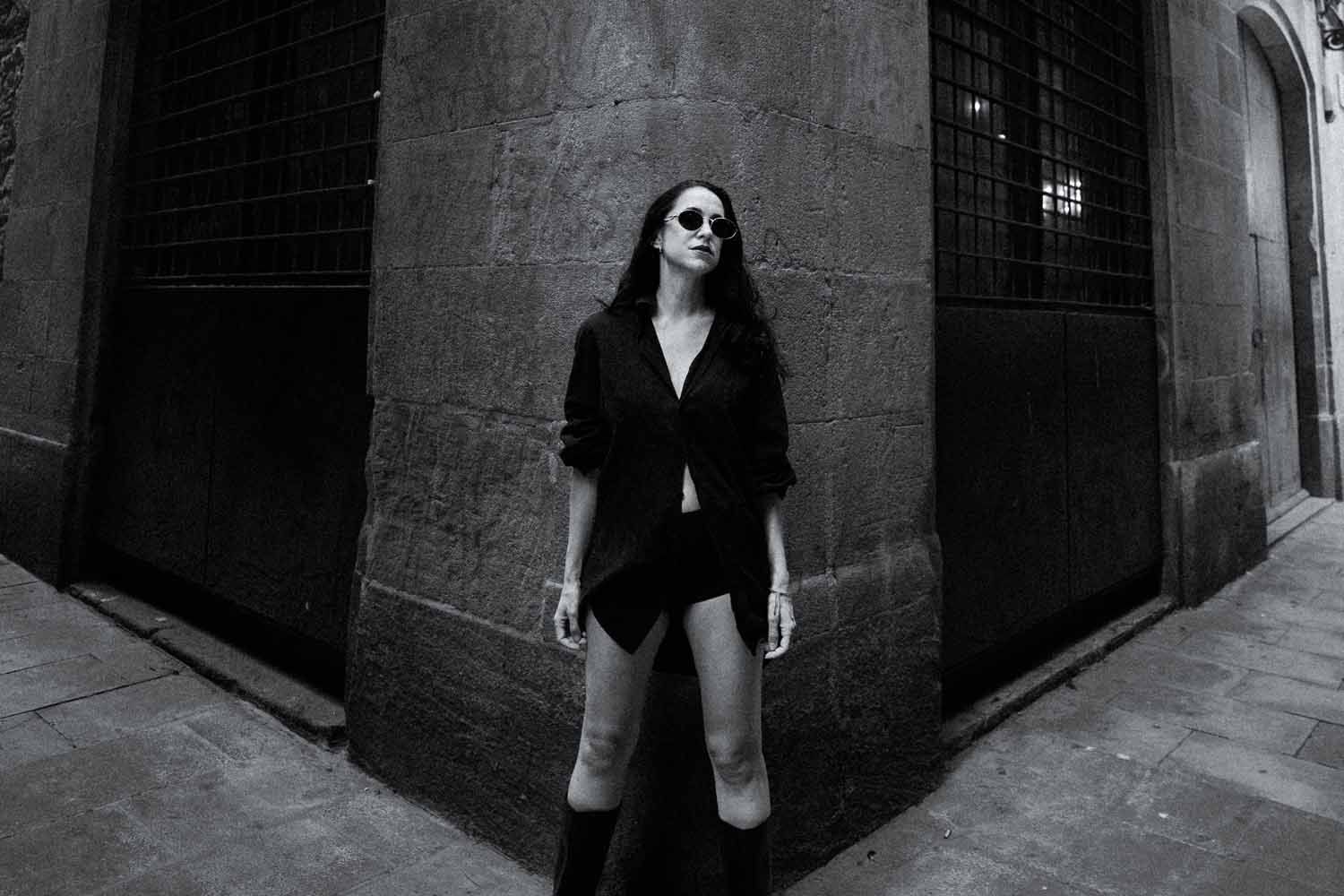
For Sole Llorente, 2026 has become a year of transition. After building her career in Barcelona and establishing herself across the European techno scene, the Argentine DJ and producer has recently relocated to Berlin, embracing a new environment as her sound continues to evolve.
That shift arrives alongside Game, her latest EP on Extima. Featuring the tracks “Game” and “Jogo,” the release explores modern love through stripped-back techno grooves, rolling basslines, sharp synths, and Sole’s own spoken vocals. The project also reflects a more personal side of her production, with influences reaching beyond peak-time techno into trance, rock, and melodic electronic music.
With more releases on the way, an upcoming EP on TMPL Music, and performances scheduled across Argentina, Europe, and beyond, Llorente is entering what she describes as the beginning of something new.
In this interview, Sole Llorente speaks with House Nest about Game, her move to Berlin, the evolution of her sound, her Argentine roots, and the next chapter of her career.
Hello, Sole. Thank you for joining us today. How has your summer been so far, and where are you currently based?
Honestly, it’s been a really good summer. I’ve been playing several gigs, and on top of that, I moved to Berlin, which is where I’m based now. So a lot is happening at once, which is kind of intense, but in a good way. I feel like moving here is helping me grow, not just as a person but also creatively. My sound is going through that same process, becoming more mature, and I think the two are connected.
Your new EP, Game, was released last Friday, August 14. How did the release come together, and what does the title Game mean to you?
For me, it was a really interesting process. A lot of introspection went into getting this EP to where it ended up. Extima is a label I’ve admired for a long time and have played a lot as a DJ, so having them choose this EP to be part of the label felt like a really nice recognition.
The EP has two tracks, “Game” and “Jogo,” which is actually “game” in Portuguese, so the title works in two languages at once, which I loved. The concept and lyrics were inspired by modern love and how it has become a game. The vocals are also my own, which made the EP feel even more personal.
Both tracks feature a stripped-back techno groove, rolling basslines, and sharp synths. What did you enjoy most about the production process, and what did you want to explore with this EP?
The production process was really interesting because I started exploring genres that had nothing to do with peak-time techno. With “Jogo,” for example, I was heavily inspired by Yotto, especially in terms of the rhythmic foundation.
I also wanted to work more with my own voice. Since I’m not a singer, my vocals are always spoken, so I carry a microphone with me everywhere and record myself until I find a phrase that connects with the idea of the track. I’m starting to see it as something that sets me apart as a producer.
You were born in Buenos Aires and spent several years building your career in Barcelona before recently moving to Berlin. What motivated the move, and what has the transition been like so far?
I’m really grateful for everything Barcelona gave me professionally. It was there that I decided to take my DJ career to a more serious level, and it opened doors that led to me being recognized internationally. But I needed a change, and moving to Berlin felt like the most natural decision given where I am right now. I feel like this city can support the growth and creative transition I’m going through.
I’ve only been here for a short time, so I’m still discovering the city, but I’m really happy with my decision. Let’s see what comes next.
You might also like: Nikka Lorak on Launching CRUEL KIND and Building the Next Generation of Electronic Music Artists
Has living in Berlin changed the way you approach music or influenced your sound? Are there aspects of the city’s techno culture that are already finding their way into your productions or DJ sets?
I haven’t been here long enough to draw any big conclusions, but I have a lot of respect for the music culture this city has. It’s a completely different environment from what I’m used to, and I’m still discovering it.
The gigs I’ve been able to attend and the DJs I’ve been able to hear have all been really surprising in the best way. The way the crowd responds to the music and the respect people here have for techno is something else. I still have a lot to explore, but I’m sure this city will continue influencing my sound and the way I approach my sets. I can already feel it happening.
Argentina has a particularly strong progressive house scene, while your sound leans toward darker and more techno-driven territory. How did you develop that musical identity, and how much did your roots in Buenos Aires influence it?
Argentina has an incredible electronic music scene, and I have so much respect for the artists and DJs who built that progressive house culture. It’s something really unique.
But my own path went in a different direction. From a very young age, I was more drawn to the trance sounds of the early 2000s, as well as rock, which I think influenced me more than people might expect. As I kept exploring, I realized I was always more attracted to the darker side of electronic music. That’s when techno came into my life, and I completely fell in love with it.
So my roots are Argentine, but my influences took me somewhere else. I think that’s always been who I am musically.
You started DJing in 2018 and have since played venues and festivals across Europe and beyond. How has your approach to DJing evolved since those early years?
I’ve evolved a lot, honestly. As the venues and opportunities grew, so did my maturity behind the decks. One of the biggest turning points was studying production, which completely changed the way I approach mixing and opened a lot of doors for me across Europe, connecting me with producers from all over.
Beyond the technical side, I think evolution as a DJ is something that never stops. I’m a curious person, always looking to change and grow, and I truly believe you never stop learning in this profession. I don’t doubt that will continue to be the case throughout my career.
You’ve played alongside artists such as Adam Beyer, Bart Skils, Fatima Hajji, Eli & Fur, and Brina Knauss. Is there a particular experience or artist you’ve worked alongside that had a significant impact on your development?
There are so many people I could mention, honestly. Sharing a booth with someone like Bart Skils was definitely impactful for me, but I also want to say that some of the most important people in my career are DJs who may not have that same level of recognition.
They are the artists who gave me opportunities to play, shared their knowledge, and helped me grow in ways that aren’t always visible from the outside. I think that side of the industry doesn’t get talked about enough. Everyone I’ve shared a booth with has left something with me, and I’m really grateful for that.
Your music has been released on labels including Gain Records, Natura Viva, LW Recordings, Skull And Bones, and IbogaTech. What do you look for in a label when deciding where your music belongs?
There are several things I take into account. Obviously, the sound has to make sense. What I’m creating has to be coherent with what the label is putting out, and I always look at the artists and producers they work with. But beyond that, I also look at whether the label has a community around it and whether they do more than just release music.
I think a lot of people dream about signing to the biggest labels because there’s this idea that it will completely change your career overnight. Sometimes it does, but not always. For me, it’s more important to grow as an artist, both creatively and as a producer, and to have the freedom to do that. A big label name alone isn’t always the most important factor. It has to feel like a real exchange where both sides are genuinely invested.
Now that you are based in Berlin, what are you hoping this new chapter will bring creatively? Are there particular goals you want to achieve as an artist over the next year?
My goals have changed a lot since I started thinking about Berlin as home, just as my sound is evolving. I still have three releases coming before the end of the year, and I’m really excited about all of them, including one on a label I truly admire, run by artists I look up to.
I’m also about to release an EP on TMPL Music, ADRIANNA’s label. She’s a DJ and producer I really admire, and I’m fortunate to know her personally. A lot is coming, and a lot is changing, so stay tuned because I’ll be announcing things very soon. It really feels like the beginning of something new.
What else can we expect from Sole Llorente for the rest of 2026? Are there more releases, collaborations, or upcoming performances you can tell us about?
It’s going to be a really busy end of the year, honestly. On the live side, I’ll be heading back to Argentina, returning to Barcelona to play at Input, going to ADE, and playing in London and Switzerland, among other dates I’m really looking forward to.
There are also more releases coming that I’ll be announcing soon. Overall, it’s been a year of a lot of change and growth, and I’m really happy with where things are heading. Stay tuned.
Sole Llorente’s “Game” is out now via EXTIMA.
Follow Sole Llorente on Social Media:
SoundCloud l Spotify l Instagram
