
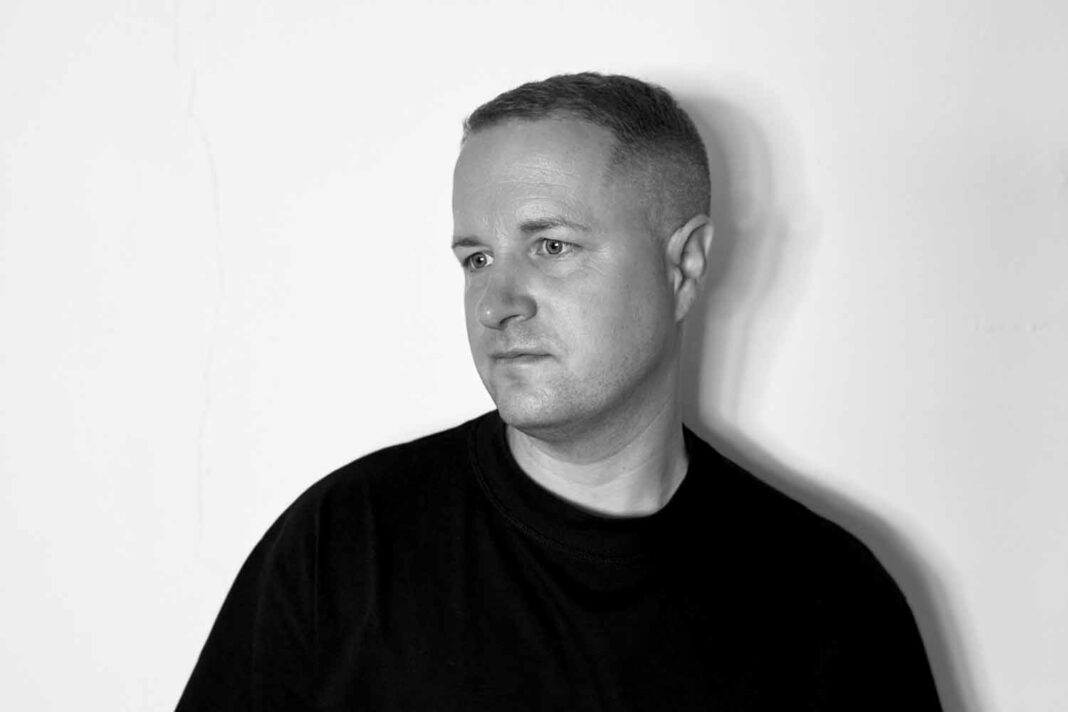
German producer STES8410 has spent the past two years developing a focused and atmospheric approach to electronic music, shaped by emotional storytelling and detailed sound design. Based in Germany, he approaches production with patience and intent.
Balancing music alongside family life and a demanding professional career outside the studio, STES8410 brings a strong sense of discipline and clarity into his creative process. Minimal arrangements, evolving low end, and carefully layered textures sit at the core of his sound, allowing each track to unfold gradually.
He opens 2026 with “Desert Moon,” his first release of the year on Cafe De Anatolia, marking the beginning of a broader conceptual series planned across the coming months. Built around Middle Eastern–inspired textures and progressive movement, the track reflects a more defined artistic direction as his sound continues to evolve.
In this interview, STES8410 speaks with House Nest about the origins of his alias, the influence of Germany’s club culture on his perspective, balancing music with family and work, the creative process behind “Desert Moon,” and the artistic vision.
Hello, Stefan, thank you for joining us today. How are you doing? Where are you currently based?
I’m doing very well, thank you for having me. Currently, I’m based in Germany, where I’m spending a lot of time in the studio and preparing for the next steps ahead.
How long have you been producing electronic dance music, and who or what pushed you to create your alias, STES8410?
I’ve been producing professionally for about two years now, but the truth is that music has been an integral part of my life for as long as I can remember. Long before I opened a DAW or touched a synthesizer, sound was already shaping the way I experienced the world.
Certain textures, atmospheres, or melodies had this almost magnetic pull. They could freeze a moment in time, hold an emotion, or bring back a memory with incredible clarity.
At some point, that feeling became too strong to ignore. I didn’t just want to listen to those moments anymore; I wanted to create them. Producing music became a way to translate my inner world into something others could feel too.
The alias STES8410 grew out of something simple but deeply personal. “STE” comes from my first name, Stefan, with the “S” reflecting my family name, Schmidt. The numbers 84 and 10 mark the year and month I was born, October 1984. Over time, this combination evolved from a straightforward code into a small piece of my story.
When I was in Germany, I really loved the nightlife and the culture — countless amazing events were happening there. Do you feel that this environment has influenced your music or personal style in any way?
Even though many people associate Germany with its nightlife and legendary club culture, my relationship with that world has changed over time. In my earlier years, I actually spent a lot of nights out, exploring different scenes, absorbing the energy, and experiencing that sense of freedom and possibility firsthand. Those moments definitely shaped my understanding of what electronic music can do to a room, to a crowd, and to your own inner world.
Today, my connection to nightlife is very different. I’m not someone who goes out much anymore, at least not in the classic sense. Instead, I experience the night from behind the decks. As a DJ, I get to be part of that atmosphere in a more intentional way, creating the energy rather than chasing it. It’s a quieter, more focused relationship with the scene, but in many ways it feels deeper.
What has always influenced me most, though, are the early days of electronic music itself, the rawness, the experimentation, and the feeling that something entirely new was emerging. That spirit still guides me. It shapes how I think about atmosphere, repetition, and emotional tension. So even if I’m not out every weekend anymore, the roots of the culture, and my own history within it, continue to flow into my personal style and the sound I create today.
You’re also a devoted husband and a great dad to your daughter and son. How do you balance family life with your music career?
Balancing family life with my music career is definitely a meaningful challenge, but it’s not the only one. Alongside being a husband and father, I also work in a global leadership role within a large company, and during my early years in music, I completed an MBA program alongside my job. Structure and clarity have always been essential for me.
I’m someone who works in a very organized and focused way. I separate the different areas of my life quite intentionally, because that’s the only way to give each of them the attention they deserve. Prioritization is key, and my family will always come first.
When it comes to music production, efficiency and a well-designed workflow are crucial. With limited time, you learn to be very intentional about every creative step. In a way, that structure actually supports creativity, because it allows me to stay fully present in whatever I’m doing.
Read this next: HASKELL: “People Often Assume There Are Advantages, But It Sometimes Works the Other Way”
Let’s talk about your first single of 2026, “Desert Moon,” which was released last Thursday on Cafe De Anatolia. I love the Middle Eastern vibe, the strong low end, and the resonating bassline. What inspired you to explore this sound?
“Desert Moon” is the first chapter of my current release concept with Cafe De Anatolia, which will unfold over the year with five additional tracks. Each piece explores a different facet of atmosphere and emotion, but they all share a common thread.
What drew me to this particular sound was the sense of mystery that lies within Middle Eastern-inspired textures. There’s something deeply evocative and almost timeless about that vibe. When you combine it with organic elements and a progressive low end, it creates a tension that feels both grounded and otherworldly.
The track itself is built as a small story. The main melody represents the path you try to follow in life. In the middle of the track, the bassline shifts, symbolizing the distractions and temptations that can pull you away from your direction as the melody continues to evolve.
The idea behind “Desert Moon” is a reminder not to lose sight of that path. The mystical character of the sound is meant to underline that message and give the listener space to interpret it in their own way.
The track is minimal yet very effective and perfectly executed. Can you explain how you created the main resonating bassline?
For “Desert Moon,” I decided to work with two different basslines to shape the energy of the track. The first one appears at the beginning. It’s more driving and percussive, designed to reinforce the kick and give the track a strong, grounded foundation right from the start.
The second bassline takes on a different role. It flows more closely with the melody, adding movement, lightness, and a sense of progression. By letting it interact with the lead elements, the track gains additional drive and a more dynamic emotional arc. The contrast between the two basslines helps keep the arrangement minimal yet constantly evolving.
How do you usually discover new records, and how do you decide when to include them in your radio shows?
I’m constantly exploring new releases, playlists, and carefully curated compilations to stay connected with what’s evolving in the scene. Over the years, I’ve built a large and very intentional music library. Every track is selected and has inspired me in some way.
I don’t chase trends or follow what’s currently charting. I’m always searching for something distinctive, something with its own character. That foundation gives me the flexibility and depth I need for my residencies.
For my radio shows, I record my sets spontaneously. I follow the energy of the moment and choose the tracks that resonate with me in that moment. It’s less about strict planning and more about capturing an authentic flow, allowing the music itself to shape the direction of each episode.
This year marks one year since your single, “Alive.” How do you feel your sound has evolved since then, and do you have a clearer direction for where you want to go next?
“Alive” was one of my very first releases, and it still feels like a strong foundation for everything that followed. With regular airplay on well-known German radio stations, it remains one of my most successful tracks, and I’m grateful that it continues to resonate with listeners.
Since then, my sound has evolved quite naturally. Over the past two years, I’ve gained a much clearer sense of where I want to go artistically. I’m moving more toward Organic House and Progressive House, genres that allow me to combine emotional storytelling with detailed, atmospheric production.
What fascinates me is the balance between organic textures, subtle rhythmic elements, and a progressive flow that keeps the energy evolving without overwhelming the listener.
As a producer, I’ve become more intentional with sound design and arrangement. I focus more on creating space, shaping dynamics, and letting melodies and grooves breathe. The goal is to craft tracks that feel both immersive and refined, music that carries emotion.
That direction feels very true to who I am right now, and it’s the path I’m excited to continue exploring.
Read this next: Hey Cabrera!: “I have a very broad listening background that needs to be disciplined every now and then”
January flew by incredibly fast. What do you have planned for the next couple of months?
Over the next few months, I’m not only focusing on consistent releases and deeper artistic growth, but also expanding the creative framework behind my work. This new direction allows me to shape a more immersive narrative across everything I do, from studio work to live performances.
At the same time, I’m exploring new recording techniques, refining my sound palette, and developing ideas for future collaborations that could open unexpected creative paths. A few larger concepts are slowly taking shape in the background as well, projects that will bring together my music, my artistic identity, and the emotional arc that defines my sound.
2026 is becoming a year of evolution, intention, and building a catalogue that feels mine.
Support the artist and buy “Desert Moon” on Beatport
Follow STES8410 on Social Media:
SoundCloud l Spotify l Instagram
